Navigating Medicare’s recovery and reimbursement requirements can be one of the most challenging aspects of resolving a personal injury claim. When Medicare issues a Conditional Payment letter that a beneficiary or their representative believes is incorrect, for cases which have not been reported as settled to Medicare, there is a dispute process. However, for cases which have already been reported as settled to Medicare, there is a formal appeals process wherein deviation from the administrative and escalation process is not permitted. Understanding this process, the timelines, and how submissions impact the likelihood of success is critical before moving forward.
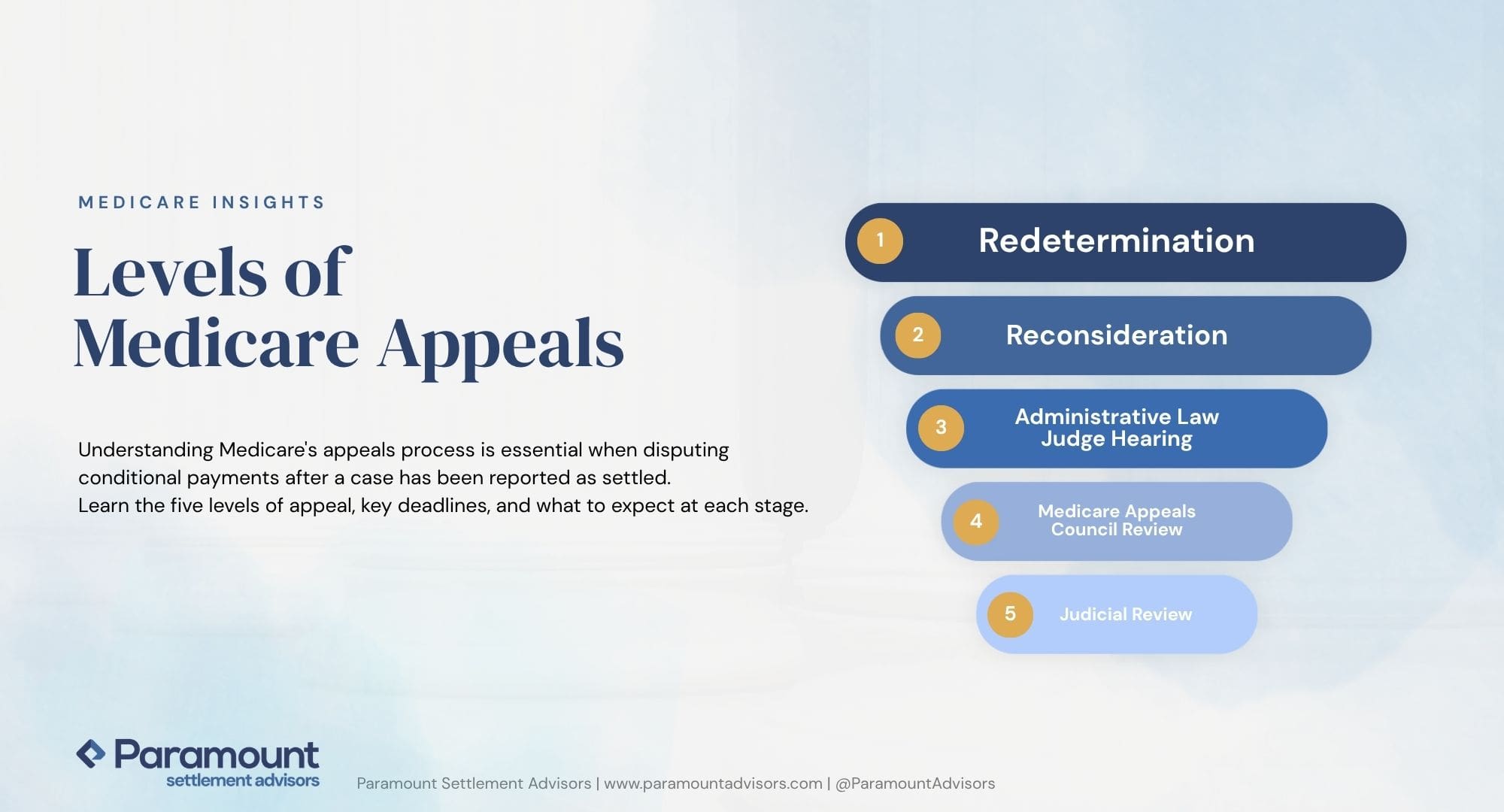
The Medicare appeals process consists of five levels, each with specific deadlines and review requirements.
Level 1: Redetermination
The first level in the appeals process is a Redetermination. Appellants have 120 days from receiving Medicare’s determination to submit the Level 1 appeal to Benefits Coordination & Recovery Center (BCRC), the current Medicare Administrative Contractor (MAC) responsible for reviewing these requests.
Once the appeal is received, the BCRC has up to 60 days to issue a Redetermination decision. This stage provides the first opportunity to present evidence supporting why Medicare’s original determination should be reconsidered.
Level 2: Reconsideration
If the Redetermination decision is unfavorable, the next step is a Reconsideration. Appellants have 180 days from receiving the Level 1 Redetermination decision to file an appeal with a Qualified Independent Contractor (QIC).
The QIC independently reviews the case and has 60 days from receipt of the appeal to issue a Reconsideration decision.
Level 3: Administrative Law Judge Hearing
The third level of appeal is an Administrative Law Judge (ALJ) Hearing through the Office of Medicare Hearings and Appeals (OMHA). Appellants have 60 days from receiving the Level 2 Reconsideration decision to request this hearing.
The ALJ generally has 90 days to issue a Notice of Decision. This stage allows for a more detailed review of the facts and evidence, and submissions to the ALJ include the contents of appeal requests in Levels 1 and 2. For this reason, it is imperative that filing at Level 1 and Level 2 are comprehensive and clear.
Level 4: Medicare Appeals Council Review
The fourth level of appeal is a Medicare Appeals Council Review, which serves as the final administrative review of the ALJ’s decision. The Council is composed of Administrative Appeals Judges within the Department of Health and Human Services (HHS) Departmental Appeals Board (DAB).
Appellants have 60 days from receiving the ALJ’s Level 3 Notice of Decision to submit the Level 4 appeal. While the Council is expected to issue a decision within 90 days, significant backlogs have resulted in substantial delays in recent years.
Level 5: Judicial Review
The final level of appeal is Judicial Review in U.S. District Court. Appellants have 60 days from receipt of the Level 4 Medicare Appeals Council decision to file a lawsuit.
Unlike the administrative levels of appeal, there is no established timeframe for the court to issue its decision.
Why Early Guidance Matters
Given the complexity of Medicare’s appeals process and the strict filing deadlines involved, careful evaluation and timely action are essential. Working with Paramount can help attorneys and claimants understand valuable options, preserve appeal rights, and develop a strategy that protects the long-term interests of Medicare beneficiaries throughout the settlement process.